Imagine running away from home for fear of being bombed, tortured or killed. Imagine running away as fast as you can, your heart pounding, hearing your torturers run right behind you, coming closer and closer.
Suddenly you see a beautiful house, full of light and music, with Neon Lights outside spelling 'Welcome, you are safe here'. You stop for a second, not believing that you finally found a safe place, you run forward and knock on the door. The door opens, a voice says, do come in, you are safe now. You are inside and for a moment all you can see is the light, all you can hear is the beautiful music, and you cry tears of relief and happiness, you are safe.
The day after your arrival in the safe haven of the Emerald Isle, though, reality kicks in. The gentle voice who welcomed you is now not so gentle any more, but is trying to make you see that you actually had no reason to run, that you were really just pretending and that a serious investigation is needed to find out whether you were indeed at risk of being killed or tortured, or if you were just hungry and needed a place with plenty of food.
As long as this investigation is running, they say, you can stay in a place called Direct Provision Centre, where you will get food, not the best food, but something you can eat and you may have to share your room with a few other people who also ran away from their countries, and you ask if you could maybe do some jobs to earn some money and find your own place and cook your own food while you wait for this investigation to finish, and the voice says 'No'. Thou shalt not work! Thou shalt get 19€ a week to buy thyself a drink and a snack, but thou shalt not work!
So what do you do?
You try your best. You try and get on with the others in the Direct Provision houses. You befriend them and you chat to them and you soon find out you are all bored out of your minds.
So you put your pennies together and get some alcohol and organise a party. It feels good to be drunk, you want to do it again, but hey, your week's 19 € is all gone. What to do?
Maybe if you could do some work on the black? Don't let the Direct Provision Centre's manager notice, just go for walks around town, find a restaurant to wash the dishes where the owners don't care if you have a work permit.
Go and paint houses, fix cars, anything, anything you used to do at home and can put to use here will do. A long as it is a little secret.
So you find a job like that and you work and earn less than the average worker, but more than the 19 € a week, and you are able to buy more alcohol and party and forget.
The more alcohol you consume the more people you meet who also drink to forget, and you soon form a circle of friends of the wrong kind.
You work on the black and you drink and you drink some more, but you are a grown-up man and you need sex. So you date drinking Irish girls who swear every two words and want an adventure with a man of a different colour. Drunk, of course.
You carry this on for a few months and you drink more and more until the day your drunken spirit starts a fight with another guy who thinks you screwed his woman. You return to your shared room with two black eyes and a few teeth missing and you fall asleep, or rather nearly in a coma.
You wake up with a bursting headache and stumble to the bathroom, and there you see yourself in the mirror.
'Is this me?', you think. You remember how only last year, before the bombing started you were a teacher in your country, you enjoyed a certain status and you were respected by everyone in your environment. Is this me? How did I get here?
Am i really this bum that goes around drinking and fighting? How can I get out of this?
You stay indoors that day and find a woman from one of your neighbouring countries who is willing to talk to you. You tell her about what has happened and how ashamed you are of what you have become. She doesn't react.
She stares at the floor and sighs. You ask her what she's thinking. She looks at you, her eyes filled with tears, and says 'at home I was a nurse, I took care of people, Here I take care of only men, with big bellies, in their cars, on the side of the road..........
This, dear readers, is what is happening right here, on the fringes of society. The Direct Provision Centres are a source of deep misery, where people are forced to live in very bad circumstances and trouble is brewing. If the government doesn't find an alternative solution to the treatment of asylum seekers, it will soon be faced with serious problems that have been brewing right under our noses and we have all chosen to neglect hem.
What do you think when you pass by the Direct Provision Centres? Do you even know what and where they are?
What do you think when you see a black man walking on his own late at night, looking drunk? Have you ever thought 'this guy is probably a highly qualified teacher, doctor or IT specialist who had to run away', or do you just think 'Another one of those so called asylum seekers'?
It is high time to investigate the provision centres and to act and give people the dignity they so deserve!
Showing posts with label Ireland. Show all posts
Showing posts with label Ireland. Show all posts
Thursday, August 28, 2014


Tuesday, July 29, 2014
Expat Life is Good In Ireland
One of the best things I have done over the past few weeks is making the decision that life is what you make of it, and you can sit down and despair or you can go out and make things happen. I chose the latter.
I got in touch with Jeanett Taku, a mighty wonderful Nigerian woman who lives in Cork and who organised the very first Miss Bronze and Gold Ireland scholarship pageant, with the goal of empowering young women. The prize money for miss Bronze Ireland would be money to pay for college fees.
I like that idea, interviewed Jeanett about the event and then invited my friend, Ken Buckley, cultural ambassador of the Irish in Europe Association.
We both invited our own friends and were treated like royalty at the event.

The evening went well, and apart from the wonderful ladies who took part, I also got to meet a lot of new people. And as one thing lead to another, I met and interviewed Cordelia and Tony, who were organising a multi cultural evening with the noble goal to bring all the different nationalities in Cork together and party.
And there is no better way to enjoy yourself than at a party with African House music.
Myself and Ken went again, with friends. At our table were two South Africans, one Argentinian, One Irish man, one Polish lady and myself. We had a ball. And we made new friends again.
I am now working on an art project with Kasia, The Polish lady, and I found a very good friend in Julian from South Africa.
It took me 16 years to come to this stage, For too long I tried to be like the Irish, but I now realise it is a lot more fun to be just Belgian and enjoy myself the way I am.

I am meeting Cordelia and Tony again this week, because we want to work on the next cultural night and hopefully get enough attention for it, so Irish people will join in as well and get a taste of what their new neighbours are like, and maybe find new friendships.
Last week then, this blog helped Kinsale to stardom in Belgium. The crew of Vlaanderen Vakantieland, a programme on VRT, the Flemish National TV, came over to Ireland to film the Wild Atlantic Way, I met them at their last stage in Kinsale, we were wined and dined in the Fishy Fishy restaurant by Martin Shanahan and then I walked around with the celebrities, showing some of the lovely places Kinsale has on offer and talking very briefly about the historic background of Kinsale. It was pretty cool to walk around being filmed, my ten minutes of fame were great fun anyway. We ended the evening with a barbeque with the Flemish crew, it was great to feel home again for a couple of hours speaking and joking in Dutch.
 So there you go. Let's all become a bit more cosmopolitan and show this country off at home, it can only be a win-win situation.
I got in touch with Jeanett Taku, a mighty wonderful Nigerian woman who lives in Cork and who organised the very first Miss Bronze and Gold Ireland scholarship pageant, with the goal of empowering young women. The prize money for miss Bronze Ireland would be money to pay for college fees.
I like that idea, interviewed Jeanett about the event and then invited my friend, Ken Buckley, cultural ambassador of the Irish in Europe Association.
We both invited our own friends and were treated like royalty at the event.

The evening went well, and apart from the wonderful ladies who took part, I also got to meet a lot of new people. And as one thing lead to another, I met and interviewed Cordelia and Tony, who were organising a multi cultural evening with the noble goal to bring all the different nationalities in Cork together and party.
And there is no better way to enjoy yourself than at a party with African House music.
Myself and Ken went again, with friends. At our table were two South Africans, one Argentinian, One Irish man, one Polish lady and myself. We had a ball. And we made new friends again.
I am now working on an art project with Kasia, The Polish lady, and I found a very good friend in Julian from South Africa.
It took me 16 years to come to this stage, For too long I tried to be like the Irish, but I now realise it is a lot more fun to be just Belgian and enjoy myself the way I am.


I am meeting Cordelia and Tony again this week, because we want to work on the next cultural night and hopefully get enough attention for it, so Irish people will join in as well and get a taste of what their new neighbours are like, and maybe find new friendships.
Last week then, this blog helped Kinsale to stardom in Belgium. The crew of Vlaanderen Vakantieland, a programme on VRT, the Flemish National TV, came over to Ireland to film the Wild Atlantic Way, I met them at their last stage in Kinsale, we were wined and dined in the Fishy Fishy restaurant by Martin Shanahan and then I walked around with the celebrities, showing some of the lovely places Kinsale has on offer and talking very briefly about the historic background of Kinsale. It was pretty cool to walk around being filmed, my ten minutes of fame were great fun anyway. We ended the evening with a barbeque with the Flemish crew, it was great to feel home again for a couple of hours speaking and joking in Dutch.

Thursday, May 8, 2014
Some advice before you head off on the Wild Atlantic Way
Many a tourist will be visiting the West this year, at least that's what we all hope with the Wild Atlantic way being advertised everywhere. There are a few things you need to be aware of when you come to the West, and who beter to tell you than someone like me, a true foreigner who's been living in the (South) West for the past 16 years.
Here are a few things you need to know when traveling the Wild Atlantic Way.
1. Language
According to the 2011 census 82.600 people speak Irish every day outside of work/school in Ireland. The areas where Irish is the first langugae are known as the Gaeltacht.
if you see this sign , you're in an area where Irish is the predominant language. You will not understand a word of what is being said, but do not panic, everyone in these areas is bilingual and if you ask kindly, they will help you in English.
You will be popular if you try and say a few words like 'conas atá tú'
( how are you), or if someone says that to you, you could answer'Tá me go maith',
( I'm fine).
Caution! You might think people are speaking Irish sometimes, when, infact, they speak English. Like these Cork/Kerry farmers
2. Greetings.
You will notice while driving that everyone greets you. I was told this is not out of kindness, but just to make sure not to miss anyone known to the driver, as to ignore someone could be taken very badly. It is therefore better to greet everyone you pass. The way to do this is by sticking up your index or briefly hold up your hand. Don't wave at people, that is just too silly.
If you pass someone you talked to the day before and that person says 'how are ya', please don't make a fool of yourself by stopping and explaining you have a bit of a sore head that morning because you're not used to drinking Guiness, don't stop at all, just keep walking and mumble 'grand, and yourself?' You should never say 'very well', that's just not done, in order to make the other person feel OK about himself you just say 'not too bad', while walking on, of course!
If you do want to start a conversation, talk about the weather. People will stop and take their time to talk about the weather. Now bear in mind that ' a lovely day' in Ireland can vary from a very grey dull day with no wind and no rain to blue sky and sunshine. Irish people are always very optimistic when it doesn't rain. I needed a few years before I could say 'isn't it a gorgeous day', while looking at a grey sky. But here any day without rain and heavy winds is a gorgeous day.
Don't be shocked if a man winks at you while turning his head slightly. It is not an indecent proposal ( as it would be where I come from), it is just his way of saying hi. I've never seen a woman do it, so ladies, don't try. Come to think, men don't try either, there is a special technique to it, which only Irish men from the West seem to master.
No, Irish people don't say 'top of the morning to you' , I've only heard it said once in my whole 16 years here.
3. The Ocean
The Atlantic ocean is wild! Be careful. Learn about rip tides, try and bath at beaches with life guards, stay close to your children and don't take risks. Tides come in very fast in some places.
The ocean is cold. Think about wearing a wet suit. This is not the mediteranean, although last year you could have mistaken the coast for it, that was exceptional. You normally freeze in the water. No topless beaches here!
The ocean is fun. Go surfing, kayaking, kite surfing, wind surfing, sailing. Anything is possible. Just leave the jet skis behind. We can do without the noise.
4.Food
Eat fish. There are some great fish restaurants around.
Enjoy Irish breakfast. You won't need lunch and you can save some money that way. Make sure you know the difference between an English breakfast and an Irish one, and when you do, come and explain the difference to me, I still haven't quite figured it out.
If you eat out, always check if a restaurant takes cards. Some don't and you don't want to end a great night out with washing dishes.
5.Night Life Well, that can be great fun of course. Try and seek out the traditional bars, the most fun you can have is when people burst out in song spontaneously, although, beware, they might put you on the spot and demand a song from you. So, to make sure, rehearse a few 'party pieces' at home, don't end up singing a nursery rhyme in a panic.
Enjoy the wealth of musical talent in Ireland, you can never be disappointed.
Be aware of extreme drunks,.
If you happen to pass by a teenage disco, where teenagers are locked up in a hall with music from 9 pm till midnight. You are not prepared for the revealing clothes, at least not if you're not British, or Irish. You will be shocked by the make up and the mile-high heels the 14 to 16 year old girls wear. Your mouth will fall open and that looks silly. Mine did, the first time I went and picked my eldest son up from such a disco, and again another time ( around Halloween) when I saw one of the girls dressed in an Ann Summers red latex nursing outfit . No, this is not meant for untrained eyes.
You do get used to it, but not during the course of a holiday break.
Most of all, enjoy the beauty, the sound and the fun of this wonderful part of the country. Send me some pictures!
Here are a few things you need to know when traveling the Wild Atlantic Way.
1. Language
According to the 2011 census 82.600 people speak Irish every day outside of work/school in Ireland. The areas where Irish is the first langugae are known as the Gaeltacht.
if you see this sign
 , you're in an area where Irish is the predominant language. You will not understand a word of what is being said, but do not panic, everyone in these areas is bilingual and if you ask kindly, they will help you in English.
 You will be popular if you try and say a few words like 'conas atá tú'
( how are you), or if someone says that to you, you could answer'Tá me go maith',
( I'm fine).
Caution! You might think people are speaking Irish sometimes, when, infact, they speak English. Like these Cork/Kerry farmers
2. Greetings.
You will notice while driving that everyone greets you. I was told this is not out of kindness, but just to make sure not to miss anyone known to the driver, as to ignore someone could be taken very badly. It is therefore better to greet everyone you pass. The way to do this is by sticking up your index or briefly hold up your hand. Don't wave at people, that is just too silly.
If you pass someone you talked to the day before and that person says 'how are ya', please don't make a fool of yourself by stopping and explaining you have a bit of a sore head that morning because you're not used to drinking Guiness, don't stop at all, just keep walking and mumble 'grand, and yourself?' You should never say 'very well', that's just not done, in order to make the other person feel OK about himself you just say 'not too bad', while walking on, of course!
If you do want to start a conversation, talk about the weather. People will stop and take their time to talk about the weather. Now bear in mind that ' a lovely day' in Ireland can vary from a very grey dull day with no wind and no rain to blue sky and sunshine. Irish people are always very optimistic when it doesn't rain. I needed a few years before I could say 'isn't it a gorgeous day', while looking at a grey sky. But here any day without rain and heavy winds is a gorgeous day.
Don't be shocked if a man winks at you while turning his head slightly. It is not an indecent proposal ( as it would be where I come from), it is just his way of saying hi. I've never seen a woman do it, so ladies, don't try. Come to think, men don't try either, there is a special technique to it, which only Irish men from the West seem to master.
No, Irish people don't say 'top of the morning to you' , I've only heard it said once in my whole 16 years here.
3. The Ocean
The Atlantic ocean is wild! Be careful. Learn about rip tides, try and bath at beaches with life guards, stay close to your children and don't take risks. Tides come in very fast in some places.
The ocean is cold. Think about wearing a wet suit. This is not the mediteranean, although last year you could have mistaken the coast for it, that was exceptional. You normally freeze in the water. No topless beaches here!
The ocean is fun. Go surfing, kayaking, kite surfing, wind surfing, sailing. Anything is possible. Just leave the jet skis behind. We can do without the noise.
4.Food
Eat fish. There are some great fish restaurants around.
Enjoy Irish breakfast. You won't need lunch and you can save some money that way. Make sure you know the difference between an English breakfast and an Irish one, and when you do, come and explain the difference to me, I still haven't quite figured it out.
If you eat out, always check if a restaurant takes cards. Some don't and you don't want to end a great night out with washing dishes.
5.Night Life Well, that can be great fun of course. Try and seek out the traditional bars, the most fun you can have is when people burst out in song spontaneously, although, beware, they might put you on the spot and demand a song from you. So, to make sure, rehearse a few 'party pieces' at home, don't end up singing a nursery rhyme in a panic.
Enjoy the wealth of musical talent in Ireland, you can never be disappointed.
Be aware of extreme drunks,.
If you happen to pass by a teenage disco, where teenagers are locked up in a hall with music from 9 pm till midnight. You are not prepared for the revealing clothes, at least not if you're not British, or Irish. You will be shocked by the make up and the mile-high heels the 14 to 16 year old girls wear. Your mouth will fall open and that looks silly. Mine did, the first time I went and picked my eldest son up from such a disco, and again another time ( around Halloween) when I saw one of the girls dressed in an Ann Summers red latex nursing outfit . No, this is not meant for untrained eyes.
You do get used to it, but not during the course of a holiday break.
Most of all, enjoy the beauty, the sound and the fun of this wonderful part of the country. Send me some pictures!
Monday, May 5, 2014
A cry for help in Ireland. What to do?
On Saturday I went to the Ballydehob jazz festival with my friend Lucy, a Moorish looking woman from the West. Lucy married a Corkonian with an Italian father. I always thought she was the Italian of the two, but I was wrong.
We thoroughly enjoyed our evening, although we barely heard any jazz. The town was buzzing, the charming little pubs that probably never changed over the last 100 years were full,everyone looked happy. We went in to the Levis' bar and settled in the tiny living room in the back, which felt like a museum with the old stove and the towels drying above it, the lovely old photographs, and posters with bed time prayers on the walls,the kitchen cabinets with porcelain, the sacred heart on the wall, it felt as if grandma Levis had only just gone out the door to get some peat.
A few people sat down at a table next to our seats and we started talking. They were from Edingburgh, visiting their friend who lives in Schull but was from, and here you have it, Sligo.
'Oh dear' I thought, 'here we go, we'll never get away now'. Because, you see, my friend is from Sligo as well, and when two Sligo people meet they have to compare notes on who they know, pass on the gossip and especially show how happy they are to meet another Sligo person.
And I was right .
Lucy 's cousin had been to the same school as the other Sligo lady whose name I can't remember, they told each other where they lived, what they thought of the movie 'The Calvary', which was filmed in Sligo, and used the local butcher's as one of the locations.
Oh and how was the local butcher now? Gossip, gossip, gossip. When I thought everything had been said, the other Sligo lady exclaimed 'wait, there is a Sligo man standing at the bar, he's a musician who lives in Cork, but he's a Sligo man'. It didn't take long before mr Sligo came in, all excited about meeting his town compatriots. Of course he knew such and such and so and so and on and on it went.
It made me think. When I meet another Belgian, we mostly exchange a few words, and then never see each other again, unless it's accidentally. If anyone tells me they know another Belgian, I just say 'Oh Really?' but that's about it. So it is nice to see that over here even being from the same county is special.
What would Lucy do if someone from Sligo became ill, depressed, or needed any other help? I think she'd step in and do all she could to help out.
So, when I got a text message from a fellow Belgian last night saying 'please help' I decided to go and find him.
I don't really know the man. Someone brought me in contact with him a few months ago when he was destitute, thrown out by his wife, unemployed. with no social welfare. I helped him by pointing him to Focus Ireland, invited him over for dinner a few times and went out for a drink and a chat with him as often as I could, but as I was going through a separation myself, he was dragging me down, so I told him , once he had sorted his social security out and found a room, I wouldn't see him anymore. I didn't hear from him again, until last night.
Until that message.
I drove over to where he was at the coast.We talked and talked, I tried to convince him to seek medical help, which he refused. It is not easy to convince an ex- university lecturer, but at least I think I did manage to stop him from doing something stupid, just for the next 24 hours anyway. He went back to his room. I sent him a text this morning, which he answered saying he still felt like it makes no sense to go on living. And this afternoon I got no more replies. And here I am now, worrying about this fellow Belgian, who is somehere in Cork, I have no address, only a mobile number.
I sent him another text asking him to contact The Samaritans, with their free call number. No reply.
What should I do?
We thoroughly enjoyed our evening, although we barely heard any jazz. The town was buzzing, the charming little pubs that probably never changed over the last 100 years were full,everyone looked happy.

A few people sat down at a table next to our seats and we started talking. They were from Edingburgh, visiting their friend who lives in Schull but was from, and here you have it, Sligo.
'Oh dear' I thought, 'here we go, we'll never get away now'. Because, you see, my friend is from Sligo as well, and when two Sligo people meet they have to compare notes on who they know, pass on the gossip and especially show how happy they are to meet another Sligo person.
And I was right .
Lucy 's cousin had been to the same school as the other Sligo lady whose name I can't remember, they told each other where they lived, what they thought of the movie 'The Calvary', which was filmed in Sligo, and used the local butcher's as one of the locations.
Oh and how was the local butcher now? Gossip, gossip, gossip. When I thought everything had been said, the other Sligo lady exclaimed 'wait, there is a Sligo man standing at the bar, he's a musician who lives in Cork, but he's a Sligo man'. It didn't take long before mr Sligo came in, all excited about meeting his town compatriots. Of course he knew such and such and so and so and on and on it went.
It made me think. When I meet another Belgian, we mostly exchange a few words, and then never see each other again, unless it's accidentally. If anyone tells me they know another Belgian, I just say 'Oh Really?' but that's about it. So it is nice to see that over here even being from the same county is special.
What would Lucy do if someone from Sligo became ill, depressed, or needed any other help? I think she'd step in and do all she could to help out.
So, when I got a text message from a fellow Belgian last night saying 'please help' I decided to go and find him.
I don't really know the man. Someone brought me in contact with him a few months ago when he was destitute, thrown out by his wife, unemployed. with no social welfare. I helped him by pointing him to Focus Ireland, invited him over for dinner a few times and went out for a drink and a chat with him as often as I could, but as I was going through a separation myself, he was dragging me down, so I told him , once he had sorted his social security out and found a room, I wouldn't see him anymore. I didn't hear from him again, until last night.
Until that message.
I drove over to where he was at the coast.We talked and talked, I tried to convince him to seek medical help, which he refused. It is not easy to convince an ex- university lecturer, but at least I think I did manage to stop him from doing something stupid, just for the next 24 hours anyway. He went back to his room. I sent him a text this morning, which he answered saying he still felt like it makes no sense to go on living. And this afternoon I got no more replies. And here I am now, worrying about this fellow Belgian, who is somehere in Cork, I have no address, only a mobile number.
I sent him another text asking him to contact The Samaritans, with their free call number. No reply.
What should I do?
Sunday, April 20, 2014
What has Ireland ever done for me?
It's nearly sixteen years now since we moved to Ireland from Belgium. I can still see the scene in the airport. My dad was pushing the buggy with Fintan (2) in it around the departure area in Charleroi airport, Sipke (5) was walking with him and singing ' Molly Malone', the only Irish song we knew at the time, apart from a few notes from 'No, Nay, Never' and 'All Kinds of Everything'.
I don't know what must have gone through my dad's head at the time, he never told me. It must have been tough for him, but he didn't show it.
He did send me a sweet letter a few weeks later, which I keep as my treasure, the only letter my dad ever wrote to me and me alone. Now that he's no longer there, that letter has become the most precious of my posessions, together with my mother's old wrist watch.
A lot has happened since that day, and I think it's time to have a look at my Irish experience so far.
What has Ireland ever done for me?
I have shed the unpleasant Belgian habit of being too formal.
When I first got here, I was seven months pregnant, and went to see a doctor. I was totally shocked when everyone in the clinic called me by my first name. Such rudeness! It didn't take long for me to get used to it, though, and if I go back to Belgium now, I find it very hard to get used to anyone calling me mrs. Demol. I much prefer the Irish way.
I have rediscovered my singing voice.
I used to sing a lot when I was younger. I loved stealing the show during family reunions, or with my friends in school and later in nursing college. But then I met mr Wrong, who told me I was making a complete fool of myself. So I stopped. I never thought of it again. Life took over, and in Belgium life is all about work, and a tiny bit of free time.
It was only when,in Ireland, one night during an after-hunt singsong, I was put on a table in the pub and announced as the lady from a far away country who would sing a tune, that I remembered how I used to sing. I was in a panic and sang the first song that came to my head, a Flemish folk song, which I would have laughed at as a teenager. I sang it and got a warm applause, and I fell in love with the Irish singsongs. I realised I needed some party pieces, and was much better prepared after that. A friend of mine invited me to join the Chorus of Opera Cork, and about 3 years after I arrived in Ireland, I was standing on the stage in the Opera House in Cork as a member of the Chorus in Strauss' 'The Bat' or 'Die Fledermaus'. I never stopped singing since, until a couple of years ago, when family troubles took my voice away again. But the love of music has remained.
I have been able to get rid of the shackles of Catholisism.
This may seem odd, as I have come to a very Catholic country, but the Catholicism here is not what it is in Belgium. I couldn't believe how much the Church rules the lives of most Irish people. The horrible stories of child abuse, the shock I felt when I learned about the Magdalenes, made me sure that I did not want to belong to any religion. I had long had serious doubts before, but the scandals and the exaggerated involvement of the Church in politics and state matters, helped me to make my decision. I am now happy to call myself a secular humanist, and that, thanks to Ireland.
I talk to people that I never met before as if I've always known them.
This is something you do very rarely in Belgium. The chitchat on the train, in a shop, in a lift, in the doctor's waiting room, or just anywhere two strangers are in the same space, is something I would never have done before. Even saying hello when passing someone on a walk has become strange over there. You keep yourself to yourself and the people you know.
It is definitely different here. I have become a true chatterbox. I talk to anyone willing to have a chat, and I find it a lot of fun talking to complete strangers. The funniest is though, that everyone always knows someone I know, whether I meet them in Galway or Dublin, there is always a connection with Cork.
If I have an idea, I can just go ahead and realise it.
It is so easy to be creative in Ireland. Maybe it is in Belgium too, but I have never felt the need to do something different over there, probably because everything is organised for you there anyway..
Apart from starting a jazz club ( which is on a stand-by at the moment due to lack of money), I have organised several concerts. It started with 'Classics in The Countryside', where The Chorus of Opera Cork and The City of Cork Male Voice Choir performed in small churches in the country side, after that I organised a couple of very successful concerts called 'It Must Be The Music' with local artists and a few very willing professionals, and it culminated in the musical theatre that Swiss woman Olivia, together with director Ciaran Bermingham and myself created. It was a love story, told with the use of French songs. We performed during Culture Night in Cork, and at the Bandon Arts Festival. Always with great success.
Unfortunately real life became too much like the story we were acting out, when my husband decided to leave the family, and that's where I lost my voice. But I know for certain that I would never have been able to do this in my own country.
Right now we are in talks to start a community radio in Bandon town, just because we can.
I can now produce and present a radio show.
It's virtually impossible to find an interesting job at my age,but I have become involved with an online radio station, where I have been allowed to produce my own show, The New Rebels and Sounds and Places. The first is a show for immigrants like me , the latter is a world music show.
I didn't apply for a job, I just talked to the woman who was in the process of creating Irish Radio International, and told her I always dreamed of doing a show for immigrants, and she gave me that chance.
So, although it is unpaid, I have learned a load of new skills, and have found something I really enjoy doing. I have in the mean time completed a course in radio documentary making, and can hopefully start monetizing at least a little in the future.
I have found the best possible friends in this country.
Women help each other out so much more than in my old place. The friendships I have here and the support I've had from my friends during the time I had cancer, and now, during the separation, are second to none. And although I'm sure there are deep friendships to be had anywhere, there just is't time enough in busy places like Belgium.
I turn off the immersion and I know what a hot press is.
Yes, I have come to that stage now, where I worry about the hot water costs.
Last but not least, I have had a glorious time with my children
I have cursed the Irish lack of childcare facilities many a time when I first got here, but now I look back and think it may not have been all that bad.
The Irish country side is just perfect for children to grow up in. There is a freedom here that you don't find anywhere else. Belgium has a lot more facilities, much more activities . There are plenty of music schools for everyone, there is always a sporstclub, a sports hall or a youth club. There is pre- and after school care, and great child care facilities. Maybe it's just a bit too easy though. That is what makes Irish children strong. Not everything is organised for them, they have to put a lot of effort into what they want to do. This makes them more independent and much more mature than their peers in Belgium. I know, I know, it is just an idea I have and I may be totally wrong. what do you think?
This is not the full list of good things I have found in Ireland, but I could probably fill a book.
And for the bad things? Well, I've written enough about those.
I don't know what must have gone through my dad's head at the time, he never told me. It must have been tough for him, but he didn't show it.
He did send me a sweet letter a few weeks later, which I keep as my treasure, the only letter my dad ever wrote to me and me alone. Now that he's no longer there, that letter has become the most precious of my posessions, together with my mother's old wrist watch.
A lot has happened since that day, and I think it's time to have a look at my Irish experience so far.
What has Ireland ever done for me?
I have shed the unpleasant Belgian habit of being too formal.
When I first got here, I was seven months pregnant, and went to see a doctor. I was totally shocked when everyone in the clinic called me by my first name. Such rudeness! It didn't take long for me to get used to it, though, and if I go back to Belgium now, I find it very hard to get used to anyone calling me mrs. Demol. I much prefer the Irish way.
I have rediscovered my singing voice.
I used to sing a lot when I was younger. I loved stealing the show during family reunions, or with my friends in school and later in nursing college. But then I met mr Wrong, who told me I was making a complete fool of myself. So I stopped. I never thought of it again. Life took over, and in Belgium life is all about work, and a tiny bit of free time.
It was only when,in Ireland, one night during an after-hunt singsong, I was put on a table in the pub and announced as the lady from a far away country who would sing a tune, that I remembered how I used to sing. I was in a panic and sang the first song that came to my head, a Flemish folk song, which I would have laughed at as a teenager. I sang it and got a warm applause, and I fell in love with the Irish singsongs. I realised I needed some party pieces, and was much better prepared after that. A friend of mine invited me to join the Chorus of Opera Cork, and about 3 years after I arrived in Ireland, I was standing on the stage in the Opera House in Cork as a member of the Chorus in Strauss' 'The Bat' or 'Die Fledermaus'. I never stopped singing since, until a couple of years ago, when family troubles took my voice away again. But the love of music has remained.
I have been able to get rid of the shackles of Catholisism.
This may seem odd, as I have come to a very Catholic country, but the Catholicism here is not what it is in Belgium. I couldn't believe how much the Church rules the lives of most Irish people. The horrible stories of child abuse, the shock I felt when I learned about the Magdalenes, made me sure that I did not want to belong to any religion. I had long had serious doubts before, but the scandals and the exaggerated involvement of the Church in politics and state matters, helped me to make my decision. I am now happy to call myself a secular humanist, and that, thanks to Ireland.
I talk to people that I never met before as if I've always known them.
This is something you do very rarely in Belgium. The chitchat on the train, in a shop, in a lift, in the doctor's waiting room, or just anywhere two strangers are in the same space, is something I would never have done before. Even saying hello when passing someone on a walk has become strange over there. You keep yourself to yourself and the people you know.
It is definitely different here. I have become a true chatterbox. I talk to anyone willing to have a chat, and I find it a lot of fun talking to complete strangers. The funniest is though, that everyone always knows someone I know, whether I meet them in Galway or Dublin, there is always a connection with Cork.
If I have an idea, I can just go ahead and realise it.
It is so easy to be creative in Ireland. Maybe it is in Belgium too, but I have never felt the need to do something different over there, probably because everything is organised for you there anyway..
Apart from starting a jazz club ( which is on a stand-by at the moment due to lack of money), I have organised several concerts. It started with 'Classics in The Countryside', where The Chorus of Opera Cork and The City of Cork Male Voice Choir performed in small churches in the country side, after that I organised a couple of very successful concerts called 'It Must Be The Music' with local artists and a few very willing professionals, and it culminated in the musical theatre that Swiss woman Olivia, together with director Ciaran Bermingham and myself created. It was a love story, told with the use of French songs. We performed during Culture Night in Cork, and at the Bandon Arts Festival. Always with great success.
Unfortunately real life became too much like the story we were acting out, when my husband decided to leave the family, and that's where I lost my voice. But I know for certain that I would never have been able to do this in my own country.
Right now we are in talks to start a community radio in Bandon town, just because we can.
I can now produce and present a radio show.
It's virtually impossible to find an interesting job at my age,but I have become involved with an online radio station, where I have been allowed to produce my own show, The New Rebels and Sounds and Places. The first is a show for immigrants like me , the latter is a world music show.
I didn't apply for a job, I just talked to the woman who was in the process of creating Irish Radio International, and told her I always dreamed of doing a show for immigrants, and she gave me that chance.
So, although it is unpaid, I have learned a load of new skills, and have found something I really enjoy doing. I have in the mean time completed a course in radio documentary making, and can hopefully start monetizing at least a little in the future.
I have found the best possible friends in this country.
Women help each other out so much more than in my old place. The friendships I have here and the support I've had from my friends during the time I had cancer, and now, during the separation, are second to none. And although I'm sure there are deep friendships to be had anywhere, there just is't time enough in busy places like Belgium.
I turn off the immersion and I know what a hot press is.
Yes, I have come to that stage now, where I worry about the hot water costs.
Last but not least, I have had a glorious time with my children
I have cursed the Irish lack of childcare facilities many a time when I first got here, but now I look back and think it may not have been all that bad.
The Irish country side is just perfect for children to grow up in. There is a freedom here that you don't find anywhere else. Belgium has a lot more facilities, much more activities . There are plenty of music schools for everyone, there is always a sporstclub, a sports hall or a youth club. There is pre- and after school care, and great child care facilities. Maybe it's just a bit too easy though. That is what makes Irish children strong. Not everything is organised for them, they have to put a lot of effort into what they want to do. This makes them more independent and much more mature than their peers in Belgium. I know, I know, it is just an idea I have and I may be totally wrong. what do you think?
This is not the full list of good things I have found in Ireland, but I could probably fill a book.
And for the bad things? Well, I've written enough about those.
Saturday, April 5, 2014
Dear women of Ireland, there is nothing wrong with you!
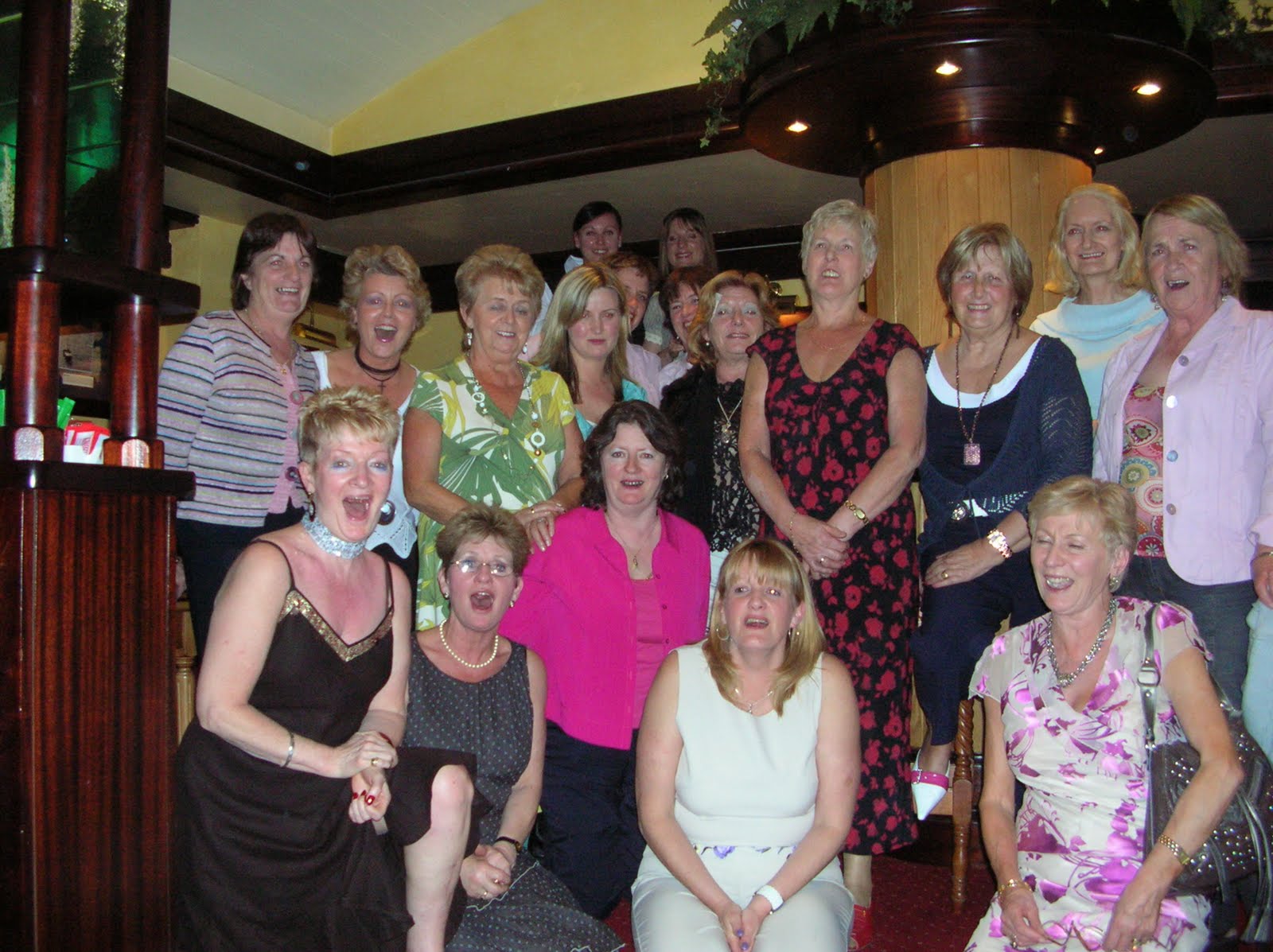
There is nothing wrong with you. You are great, beautiful, friendly human beings who have no reason to feel bad about yourselves at all.
I recently joined a new women's group in Bandon. After a first visit I was very impressed with the average level of intelligence within the group, the discussions that were taking place were very interesting and I felt this was the place for me. I would make friends and I would look forward to the Thusrday morning meetings.
And indeed I did make friends, and I thoroughly enjoyed the discussions.
What puzzled me though, were the various women who came to do workshops with us.
The first woman was involved in the West Cork Centre for prevention of violence against women. She was a very determined Northern Ireland woman, of the kind that you would feel very safe with if you were in trouble and looking for a haven. She was coming to give us a workshop in women in leadership. A great idea, so I thought.
We were divided into groups and had to rewrite history through the lives of our mothers and grandmothers.
It was a nice and sometimes a little painful experience, but I just kept asking myself one question. If we are supposed to look at history through the lives of our mothers. If women's history is built from mother to mother, then what about the mothers of only boys, what about the childless mothers, by choice or not? What about my father's mother? Is their history not just as important? If you write women's history passed on from mother to daughter, then these women have no real place in our history? That seems very unfair.
I didn't want to bring a negative undertone to the workshop, so I just let it go.
During that meeting , a community worker from a nearby town had come over to observe what we were doing. She said she would come back to do some more workshops with us. More workshops? What do we need to work on, I wondered? Is something wrong with us? Why are we being observed? Aren't we just a bunch of women who want to meet up, help each other where we can and just enjoy each other's company, or is there something wrong with us?
A couple of weeks ago another person came, again to talk about women in leadership. She was a psychotherapist (?). I was curious to see what she had to tell us. She immediately started with a poem , talking about the Godess within us, and other strange things. Then she made us do group therapy. She passed godess cards around and a book of angels....Therapy for what? Goddess? Angels?? Give me a break!
According to her, all Irish women are opressed, submissive and in need of therapy because of living in a patriarch society. Really?
Find who you really are inside, find the new you, blahblahblah. This time I couldn't keep my mouth shut.
I find in this age of individualism, too many people go 'finding themselves' leaving a path of destruction behind in their own families. I have unfortunately become a victim of someone's individualism myself. I have seen the damage done to my children. I think it's time we take a step back. Sure, some of us could have been more than we are. But we have made choices, and sometimes, these include making some sacrifices. Such is life.
What occurred to me ever since I moved to Ireland , and especially in the country side is the power women have in these villages. The men are just doing the work on the land and discussing the GAA, while the women do all the rest. They take care of each other, they discuss the new arrivals in the village and make the decision to accept them or ostracise them,, they comfort and support each other in tragedy and in happiness , they are the pillars of rural society.
Why oh why would they need group therapy. Sure some husbands are bastards, some are alcoholics and some are violent. And that has to be dealt with. It certainly isn't the case with everyone, And if I was an Irish woman, I'd be very insulted if anyone told me group therapy was needed.
It pleased me to see that I was not the only one who didn't agree. In fact most women there didn't agree. We have decided not to let anyone come over and teach us about what kind of women they want us to be. We can chose if we want to be religious or not. We are a group of women who want to have fun, be friends and help each other out where we can, find causes to support and take action if needed. We are strong and we can do it alone, without therapists or observers, and if we chose to find a godess then we can do that aswell, if we really want to see angels, that is our own choice.
Women of Ireland, you are a great bunch. Time to start believing it.
Friday, March 28, 2014
Mixed Race Irish

But that hasn't affected our normal every day lives.
However, since I started my (voluntay) job with the online radio, Irish Radio International, where I have my own show, The New Rebels, aimed at the immigrant society here and their families abroad and since I have touched the problem of racism, I am regularly confronted with some very difficult truths.
It is of course easy to ignore all that and keep on blogging about all the good things in Ireland (of which there are many), but I think we all have a repsonsibility in revealing truth, however unpleasant that truth may be.
I connected with a lady from London, Carole Brennan, who is a co-founder of the recently established Mixed Race Irish group, an association of Irish people with African dads and Irish mothers, born in the 50s, 60s and 70s, and often raised in industrial schools here in Ireland, where they were often psychologically, physically and even sexually abused.
A lot of them left Ireland after their 18th birthday and now live in self-imposed exile, but some of them stayed, like Christine Buckley, who became famous for her fight for justice for those who suffered abuse while in care.
Christine Buckley passed away a few weeks ago, and Mixed Race Irish will now continue to fight for the rights of the Mixed Race children in care.
According to Carole Brennan, there are about 150 or more people, now middle aged who grew up under these conditions. The group wants the Irish government to recognise them, to admit to the horrible abuse these children have suffered, and to apologise.
When I first spoke to Carole , I could hardly believe what I heard. After the Magdalenes, the child abuse by Catholic priests and the scandal of the industrial schools, now this , and I had never heard of it. Children who have been locked up, rejected and abused since the day they were born, becuse of the colour of their skin.
Here is the interview: Justice for Mixed Race Irish podcast from The New rebels programme on IRI by roosdemol
The Irish Times has published an article about Mixed Race Irish as well a few days ago. So far I haven't yet seen many reactions to it. The group has a lot of work to do, and they need all the support they can get.
I have asked the question if the same occured in Belgium, and a few people have sent me links. Yes, Mixed Race Belgians were also put in orphanages, and later adopted or fostered. I haven't found any reports on abuse,so far. What is interesting as well is that in Belgium they were all children of African mothers and Belgian fathers. Once the women were pregnant, the fathers would disappear, and the African mothers would go to the missions to ask for help. There they were convinced to leave the children behind, to give them a 'better future'.
I still have a lot of research to do on this subject, but it seems to me that the subject of mixed race children is one that needs to be addressed in the whole of Europe.
Here is the Facebook page of Mixed Race Irish. Please give them your support
Thursday, March 6, 2014
Help, I started baking scones!

But judging by my offspring, I have changed my view slightly. You are never Irish until you have been to Irish secondary school, or are you?
My two eldest sons, proud bearers of a Belgian passport, say that they feel Irish. They speak the lingo, have the perfect accent,have Irish friends. Although Fintan looks very Flemish like me, all his friends are Irish, they take him out to drinking sessions and unfortunately he has come home with a black eye a couple of times. They were those unprovoked attacks, by little guys who want to bring the big ones down, He is a great athlete and is doing very well in long jump. but he also watches rugby and supports the Irish team.
Sipke is a perfect mixture of his dad's Celtic genes ( skin that burns in the sun) and my Flemish ones. He goes to college in England and his accent alone makes him the Irish man, which he happily accepts. He even organised an Irish party with Irish rebel songs and the ' pin the donkey's tale on the Queen' game.
Milo, the first one born in Cork, is the one who drinks Barry's tea, wears a track suit with pride, finds it normal to have friends who come to school in a tractor and has the 'shift' competitions in the teenage disco.
Angharad is a citizen of the world. Her friends are a mixture of nationalities, Nigerian, South African, Irish and English. she has only just started secondary school, so I'll report back on her in a couple of years.
And then there is me.
After 16 years in Ireland I always thought I am as Flemish as they come. But when I started baking scones last week, I was shocked. Is this really me? Could I be changing into an Irish mam?
I did the 'how Irish are you?' test online and I got 100%. According to the results, I am a Celtic warrior.
To make sure this was right, I did another one. The result: You are as Irish as the Late Late Toy Show. Oh dear. Could I really be losing my identity?
I say 'How Are ya', on the road, I greet everyone while driving, I say 'grand altogether' and 'tis'.
My Dutch is becoming a litteral translation of English, which can be embarrassing when you're blogging in Dutch. I have become an English apostrophe nazi, but don't remember the Dutch apostrophe rules.
Help!!!
This morning though, Milo reassured me. He said mum, you say all those things, but you say them with a Flemish accent. You will never lose that. And then he immitated me, and I knew he was right.
I am still a Fleming in Ireland, a little more Irish but still not completely.
And although I bake scones, sing in pubs and even have the odd tea, I also bake waffles, as my mother did, I sing mostly songs from the continent and don't drink alcohol in the pubs. The saying'you are a waste of space in the pub' because I don't drink much, still counts.
Buíochas le Dia! And now it's time to bake my soda bread.
Subscribe to:
Posts (Atom)